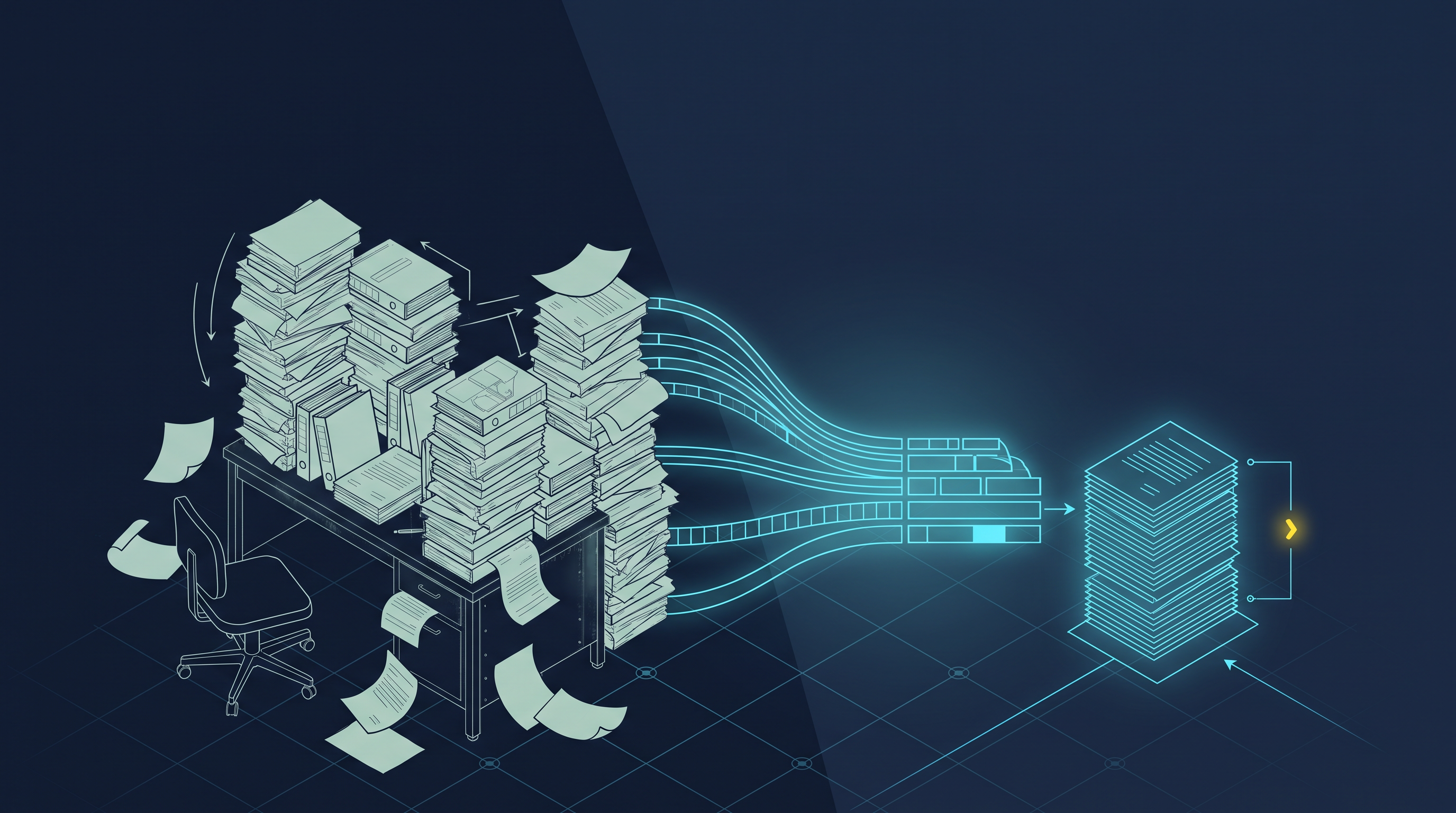
It’s summer. The sun is shining. It seems like everyone else is on vacation. But you’re still at your desk, sifting through hundreds of interview transcripts and questionnaires, and reams of payroll data, trying to finish the last item on your corporate tax return before the October 15th deadline: Form 6765.
You’ve spent months prepping the return and now you’re working to calculate the percentage of time each of your engineers spent on R&D work this past year. There are projects mislabeled in the Jira data, and there are contradictory answers by team members that you just can’t square.
It’s been months and you’re still not ready to file that R&D credit. There has to be a better way.
The Better Way
Red Ventures Senior Tax Accountant Chase Pierce was facing a similar summer filing moment two years back. His team would spend 4-5 hours per day from September through the middle of October interviewing each of the 30-50 team leaders across Red Ventures. Then, as he prepared the filing, he’d reach out for time surveys and documentation and writeups — and of course, many followups.
By switching to Neo.Tax, he estimates it saved his team up to 800 interview hours. “We would get on a call with a person, we’d talk through, ‘Okay, your project, does it meet X? Does it meet Y? Does it meet the 4-Part Test?’ Now, that is all done at the touch of a button.”
While it’s nice to save time for the tax team, the biggest value in terms of a company’s bottom line is the time saved for the engineering team.
Before switching to Neo.Tax, “I spent the whole summer trying to make something out of nothing,” Octane VP of Tax Karin Barratt explains. She would ask the engineers to export all the issues of Jira, and then try to allocate their time on an issue by issue basis. “Then I had to take all those issues from Jira and try to roll them up into business components.”
It was a pain to try to book time with the engineers for interviews and followups. But it also just felt inefficient to Karin. “If you look at the engineers’ calendars, it’s crazy. They’re booked every hour,” Karin says. “They’re too resource constrained to be doing the R&D study. And they have more important things to focus on.”
“On a scale of 1 through 10, the burden on the engineers was an eight or a nine,” she says. “Now I really feel like it’s a three.”
And of course, with the changes to Section G coming, the burden will only grow.
“For this year’s R&D Tax Credit form, you only had to put in the number of business components. Next year, you’re going to have to actually write out each business component,” Karin says. “I don’t know how people are going to do that without software.”
Pain to Gain
Especially now, as October 15th approaches, the promise of all those hours back is enticing. But obviously, none of these changes would be worth it if it meant a less accurate or valuable R&D credit.
The true value of Neo.Tax is the combination of hours saved for tax and engineering + the most accurate, comprehensive R&D credit and study.
At Mercury, controller Christine Andrews was able to claim a 10% higher R&D credit after switching to Neo.Tax while taking less than an hour of each engineering manager’s time to complete the credit.
The auditors “really liked that it was based on the tickets and that there was a clear calculation that they could follow,” she explains. “When we got the final PDF, it was over 500 pages. That’s a lot of support. That’s a lot of backup. And I think that’s exactly what you need, when you have over 200 people and over 50 projects, to really have that level of granularity and backup across all the four requirements for R&D tax credit.”
A tax director at a >$10 billion valuation manufacturing corporation was equally impressed with the detailed study backing up the R&D credit. “One of our year’s summary documentations was over 200 pages of written information,” she says of the Neo.Tax filing. “We have detailed writeups on each project. We have detailed writeups on what the departments and each person worked on. I’m much more comfortable with that.”
Or as Jen Yahiku, controller at Modern Treasury, puts it: “With Neo.Tax, there’s much more detail behind it. There’s something to substantiate it off of. It’s nice to have something to stand on rather than just being like, ‘Well, I guess we gotta go ahead and pay for an R&D study soon.’”
In tax, feeling confident in the accuracy of the output is table stakes. The reason tax teams spend months interviewing engineers and sifting through data is to get to a number they can justify to the IRS.
But what if that process is outdated? What if AI could make R&D credits take days or weeks instead of months?
This is what we built at Neo.Tax.
“I’ve been through a lot of software where they promise the world and you’re never really satisfied with it,” Octane VP of Tax Karin Barratt says. “But I have to say: I really don’t have anything negative to say about Neo.Tax. I’m super, super happy.”